Mercedes Ditched Steering Wheel Music Controls for Voice Commands in New CLA
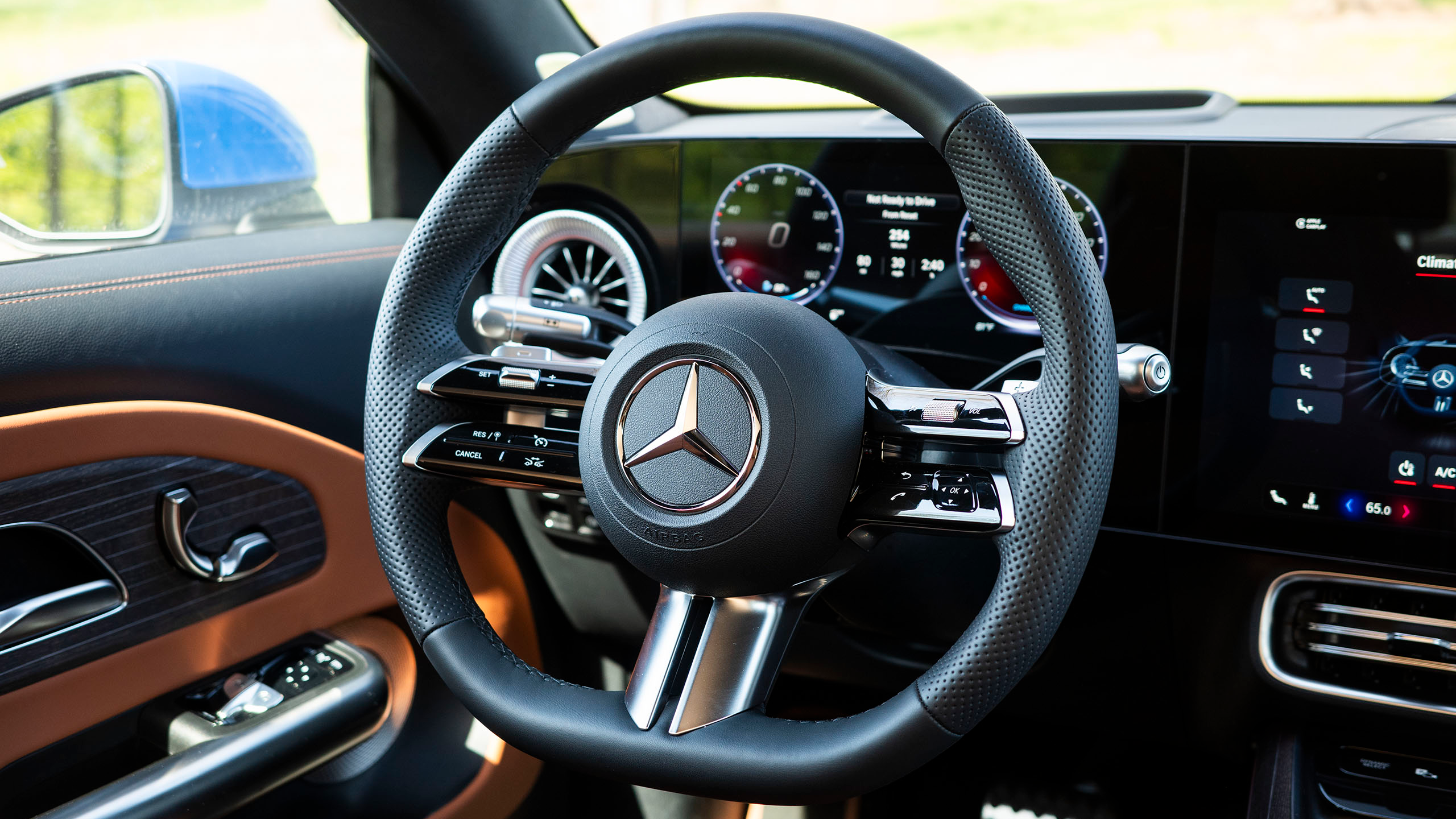
Mercedes eliminates traditional music controls from the new CLA's steering wheel, pushing drivers toward voice commands or touchscreen interaction instead.
2 comments
Sign in to join the discussion.
Sign inMercedes just turned every song skip into a potential distraction event—removing physical steering wheel music controls forces cognitive load increases and gaze shifts exactly when ISO 26262 principles demand eyes-on-road operation. Voice systems still fail in noisy cabins, with accented speech, and during critical driving phases where auditory channels are already saturated processing traffic cues. This design choice contradicts decades of HMI safety research favoring tactile feedback for secondary tasks. OEMs integrating similar voice-first architectures should mandate fallback modes and conduct rigorous distraction testing per NHTSA guidelines—ideally including real-world noise profiles and multi-generational user cohorts. Until voice recognition achieves near-perfect accuracy under all cabin conditions, removing physical controls for frequently-used functions isn't minimalism; it's premature optimization that shifts validation risk onto customers.
Mercedes is engineering out human factors redundancy in the name of aesthetic minimalism—exactly the operational trap we avoided in aviation after decades of glass cockpit lessons. When your primary interface depends on a single-mode system (voice) without mechanical backup, you've introduced a certification-level failure point that wouldn't pass DO-178C scrutiny in airborne systems. The EV corridor makes this riskier: cabin silence amplifies voice system reliability, but battery anxiety already fragments driver attention during range-critical phases. Regional operators adopting similar voice-dependent interfaces for fleet management or passenger services should architect explicit manual override pathways. Poetry celebrates ambiguity; control systems must eliminate it.