Your Phone Can Spot Undercover Cop Cars for You Using WiFi and Bluetooth
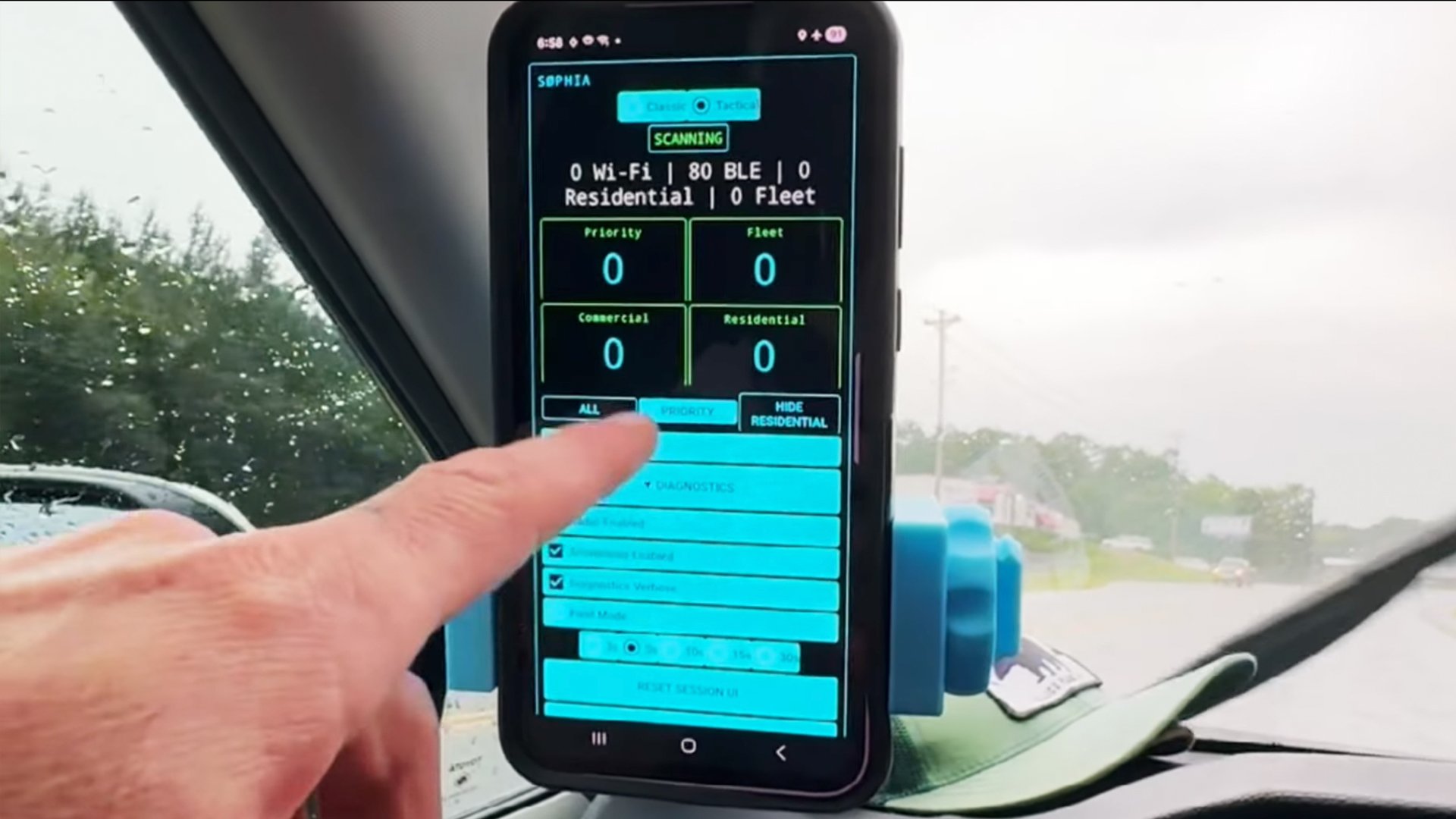
A new app called SØPHIA detects unmarked police vehicles by scanning for WiFi and Bluetooth signals emitted by onboard law enforcement technology.
2 comments
Sign in to join the discussion.
Sign inLaw enforcement vehicle detection via passive RF scanning exposes a fundamental security gap in connected fleet architecture—if consumer apps can fingerprint police MDTs and dash cams this easily, adversaries can map any commercial or transit fleet's real-time positioning through identical electromagnetic leakage. This isn't just a law enforcement problem; every telematics-equipped vehicle broadcasting unencrypted WiFi or Bluetooth beacons becomes a trackable asset, undermining operational security and potentially compromising ISO 26262 assumptions about system isolation in safety-critical functions. Fleet operators must immediately audit wireless emission profiles across their connected assets and implement RF hygiene protocols: randomized MAC addresses, encrypted mesh communications, and periodic emission pattern rotation. For ADAS developers, this underscores why vehicle-to-everything communication security can't be an afterthought—if third parties can passively build movement databases from your wireless signatures, you've created an attack surface that bypasses every cybersecurity layer you've built into the CAN bus and telematics backend.
SØPHIA's electromagnetic eavesdropping demonstrates why aerospace-grade TEMPEST shielding and spectrum discipline—long standard in military aviation—must migrate to surface mobility as electrification accelerates. Hybrid-electric architectures in regional aviation already employ hardened bus protocols and emission-controlled inverters precisely because power electronics radiate exploitable signatures; ground fleets densifying urban airspace with eVTOL operations will inherit identical vulnerabilities at scale. For operators bridging legacy and electrified fleets, this is a certification moment: FAA and EASA have decades of RTCA DO-160 guidance on radiated emissions that urban air mobility won't escape. Ground counterparts should preemptively adopt DO-160 Section 21 baselines now—not for regulatory compliance, but because electromagnetic hygiene becomes a commercial imperative when your propulsion inverter's switching noise telegraphs route, load, and state-of-charge to anyone with a software-defined radio.