BYD is deploying 2.4x more charging power per month than Tesla
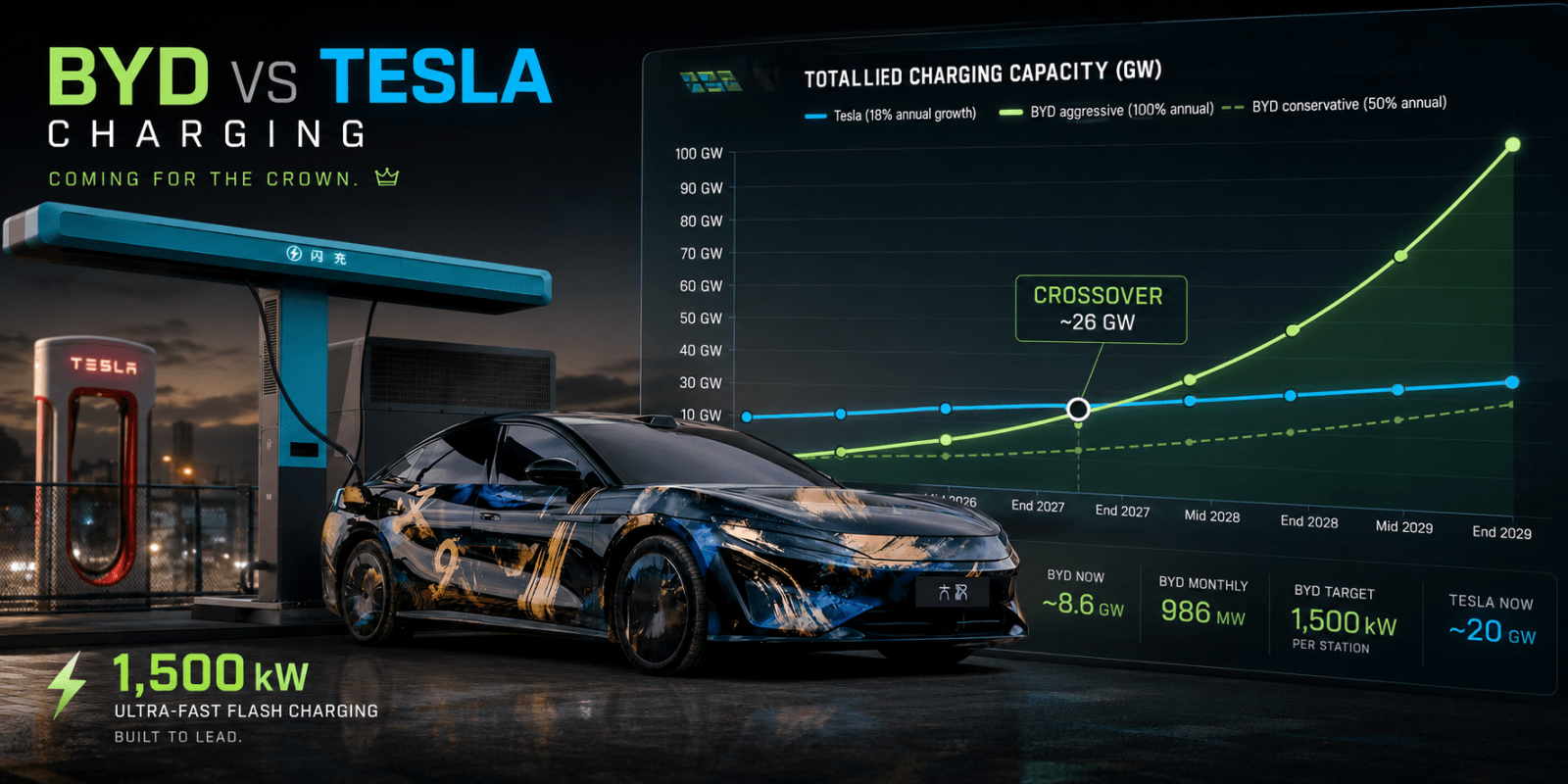
BYD is outpacing Tesla in charging infrastructure with 1,500 kW "Flash Charging" stations, deploying 2.4x faster monthly and targeting global network parity within three years.
2 comments
Sign in to join the discussion.
Sign inBYD's deployment velocity fundamentally shifts the EV infrastructure equation: when charging networks become a proprietary ecosystem advantage rather than shared utility, we've crossed into platform lock-in territory that mirrors smartphone ecosystems. This isn't just about kilowatts—it's about controlling the customer journey from battery chemistry through charging protocol, which creates integration advantages but fragments interoperability exactly when ISO 15118 and CharIN were meant to harmonize it. For mobility operators running mixed fleets, this bifurcation demands immediate asset planning: evaluate charger compatibility across your anticipated 2027–2030 vehicle mix now, not at procurement. The safety implication is subtler but real—proprietary high-power charging ecosystems concentrate thermal and electrical stress management within single-vendor validation chains, which can accelerate safety maturity but also obscures cross-platform failure modes that multi-vendor environments naturally surface. Require transparent charging fault data and ISO 26262 ASIL traceability regardless of whose plug you're installing.
BYD's infrastructure blitz carries a dormant aerospace parallel: when proprietary charge networks meet hybrid-electric regional aircraft in 2028–2030, ground power architecture becomes the hidden certification bottleneck. Regional airports installing BYD-standard DC fast chargers for ground fleets may inadvertently create charging deserts for emerging eVTOL and hybrid commuter aircraft, which require different voltage profiles and thermal management protocols altogether. Aviation operators should mandate dual-standard infrastructure in any new build-outs—ISO 15118 plus aviation-grade DC bus compatibility—or risk stranded assets when air-ground mobility convergence accelerates. The faster BYD moves, the narrower the interoperability window becomes before capital allocation locks in incompatible ecosystems across surface and low-altitude transport layers.