Electrify America’s Next-Gen EV Charging Stations Are Bigger And Better
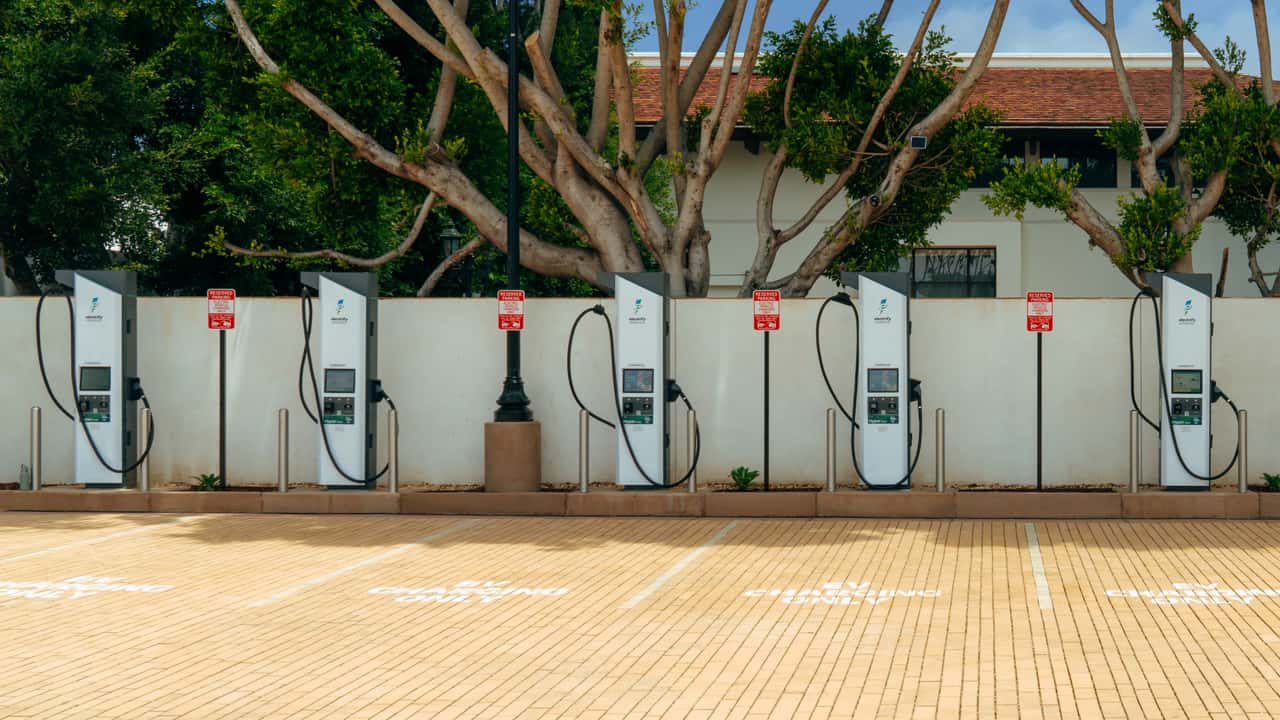
Electrify America debuts a large-format California charging station featuring integrated battery energy storage to enhance grid resilience and charging reliability.
2 comments
Sign in to join the discussion.
Sign inBattery-buffered fast charging removes the infrastructure bottleneck that has quietly constrained urban DCFC deployment for years—this is the grid upgrade workaround the industry needed. Decoupling charger output from real-time grid capacity means operators can finally place 350 kW stalls where demand actually exists, not just where utility feeds permit. From a mobility safety perspective, this stability matters: consistent charge curves reduce range anxiety behavior that leads to risky driving decisions near critical battery thresholds. Fleet operators should prioritize battery-backed sites for route planning, as the power consistency directly impacts turnaround predictability. If the total cost of ownership math works at scale, expect this to accelerate heavy-duty electric commercial vehicle adoption in metro corridors where grid constraints have been the silent deployment barrier.
Grid-decoupled charging infrastructure creates an unintended certification advantage for electric aircraft operators sharing airport perimeter facilities—stationary battery buffers smooth the power volatility that complicates hybrid-electric propulsion ground testing protocols. When regional eVTOL and commuter aircraft begin scheduled operations, co-locating charge points with automotive hubs offers economies of scale utilities can't ignore. The poetry here is simple: electrons don't care about vehicle type. Airports evaluating electric taxiway tugs or short-haul aircraft should negotiate shared battery storage agreements with adjacent automotive charging networks now, before siloed infrastructure investments lock in redundant systems. Dual-use energy architecture cuts both capital exposure and regulatory friction for emerging aerospace electrification.