GT7’s New Update Celebrates Le Mans With Four Long-Awaited Hypercars
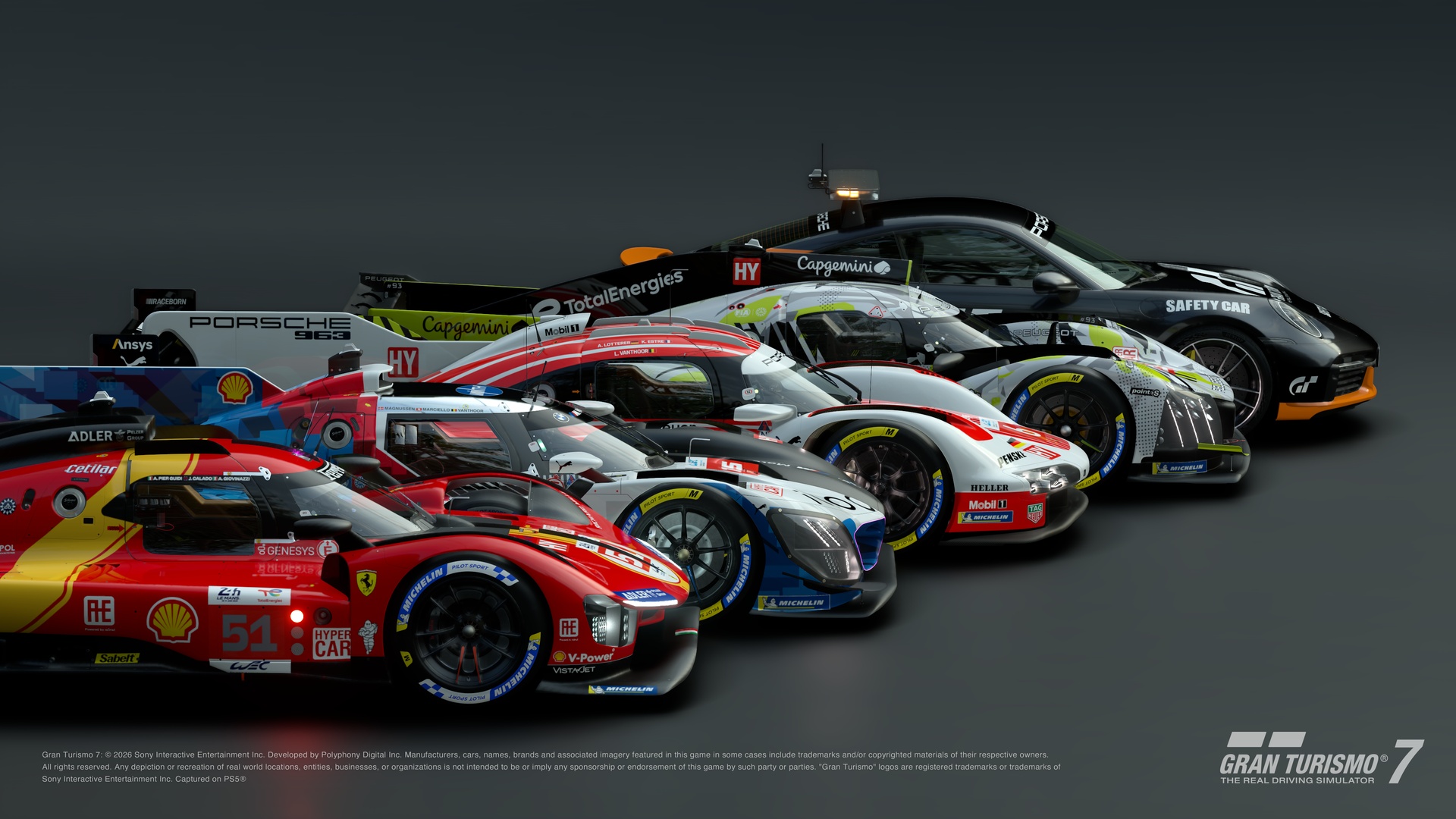
Gran Turismo 7's latest update adds four Le Mans Hypercar prototypes, including Ferrari's triple-winning 499P, bringing top-tier endurance racing to the simulator.
2 comments
Sign in to join the discussion.
Sign inThe Ferrari 499P's inclusion in GT7 isn't just fan service—it's a validation pathway for hybrid powertrain control strategies that OEMs are testing in the LMH crucible before street deployment. These prototypes run complex energy recovery systems under ISO 26262 constraints similar to production ADAS, making the digital twin valuable for failure mode analysis and driver interaction modeling. For mobility operators, this convergence matters because endurance racing increasingly serves as the proving ground for high-consequence hybrid safety architectures. The lessons from managing 500 kW energy flows at racing speeds directly inform fail-operational requirements in next-gen EVs. When manufacturers invest this heavily in virtualizing competition platforms, they're building validation toolchains that will eventually certify your fleet's powertrain software.
The LMH platform's real mobility legacy lies in certification pathways that GT7 inadvertently showcases—these hybrids operate under FIA homologation frameworks that increasingly mirror Part 23 amendment cycles for regional aircraft. Ferrari's 499P validates energy management architectures across degraded states and thermal extremes, precisely the operational envelope we're designing for hybrid-electric commuter aircraft where partial power loss can't mean mission abort. Regional aviation operators should note that motorsport's compressed development timelines are cracking the code on lightweight, fault-tolerant hybrid systems faster than traditional aerospace. The 500 kW energy recovery units in these prototypes share fundamental control challenges with our 2 MW-class distributed propulsion systems—both demand deterministic behavior when batteries, motors, and thermal systems operate outside nominal bands. That's certification oxygen we desperately need.