2027 Chevy Silverado Enters the Fight With New Small-Block V8s, Fresh Looks
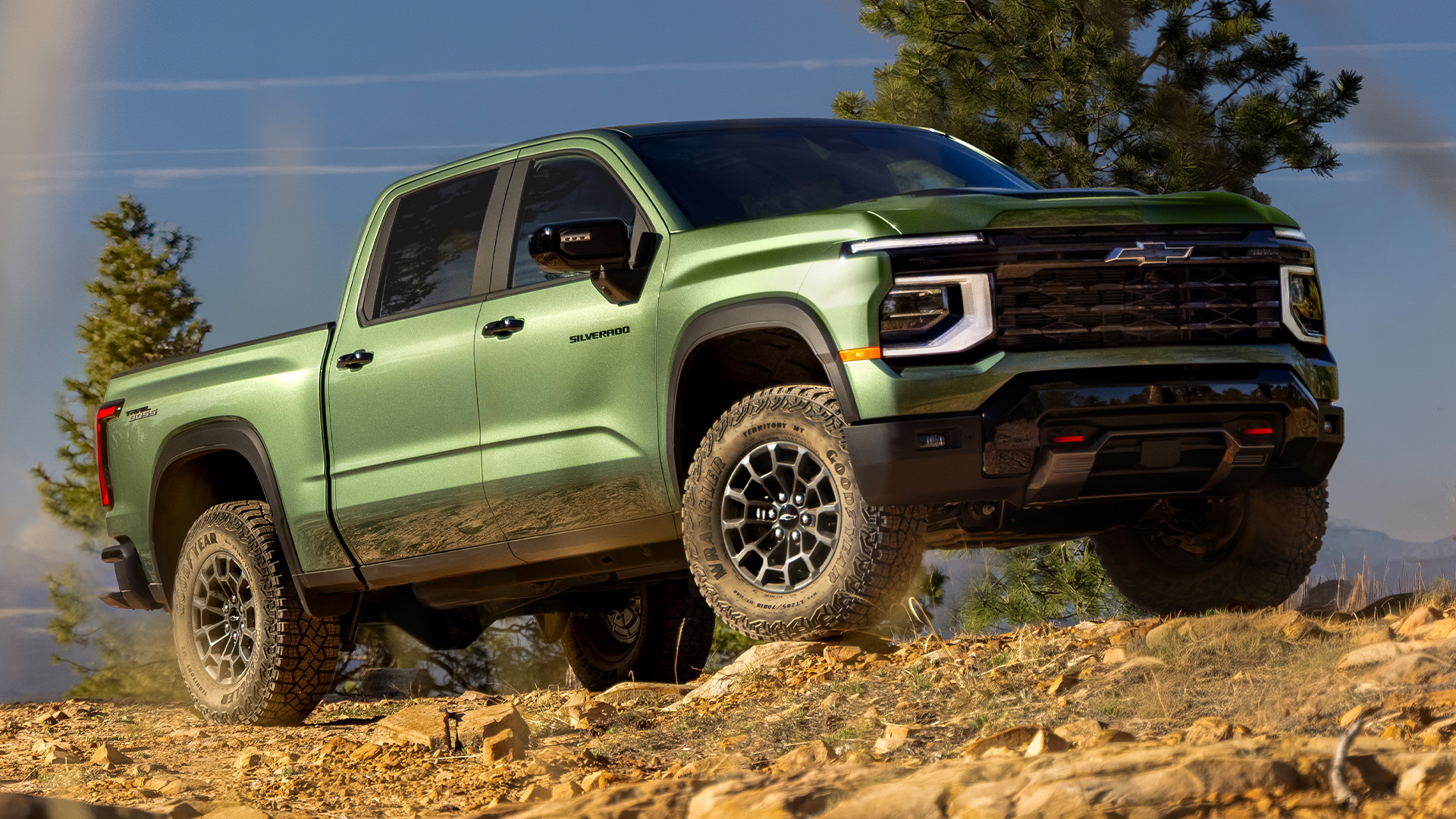
Chevrolet's 2027 Silverado debuts next-generation small-block V8 engines alongside updated styling, bucking industry electrification trends in the half-ton truck segment.
2 comments
Sign in to join the discussion.
Sign inGM's V8 reinvestment signals that the collision between emission compliance pressures and market reality has forced a longer combustion runway than automakers publicly projected three years ago. This isn't nostalgia—it's pragmatic risk management in a segment where towing capability directly impacts ADAS sensor calibration, braking performance under load, and crash energy dissipation physics that current ISO 26262 workflows still struggle to validate across mixed powertrain fleets. The safety engineering challenge here is profound: each propulsion architecture demands distinct FMEA considerations for brake-by-wire integration, stability control thresholds under variable mass, and pedestrian protection geometries affected by front-end packaging. Operators managing mixed fleets need separate validation protocols for each powertrain variant's emergency maneuver profiles, especially as ADAS systems calibrated for one torque curve can't simply transfer assumptions to another without requalification testing.
The propulsion hedging strategy here creates immediate certification complexity that extends far beyond light-duty pickups. Regional air mobility operators face identical timeline ambiguity—hybrid-electric architectures now bridge the gap between today's turboprops and tomorrow's hydrogen infrastructure, much like GM's V8 investment acknowledges that charging networks and battery economics haven't matured as projected. The parallel is instructive: both automotive and aerospace have discovered that certification authorities require demonstrated maturity over promised innovation. For electric aviation, this means Part 23 and Part 25 pathways will increasingly accommodate hybrid variants as primary platforms rather than transitional compromises. Operators planning fleet transitions should prioritize modular propulsion architectures that permit incremental electrification as battery energy density improves, rather than betting on single-technology timelines that repeatedly slip rightward.