Lexus RX Is About To Get a Lot Less Boring
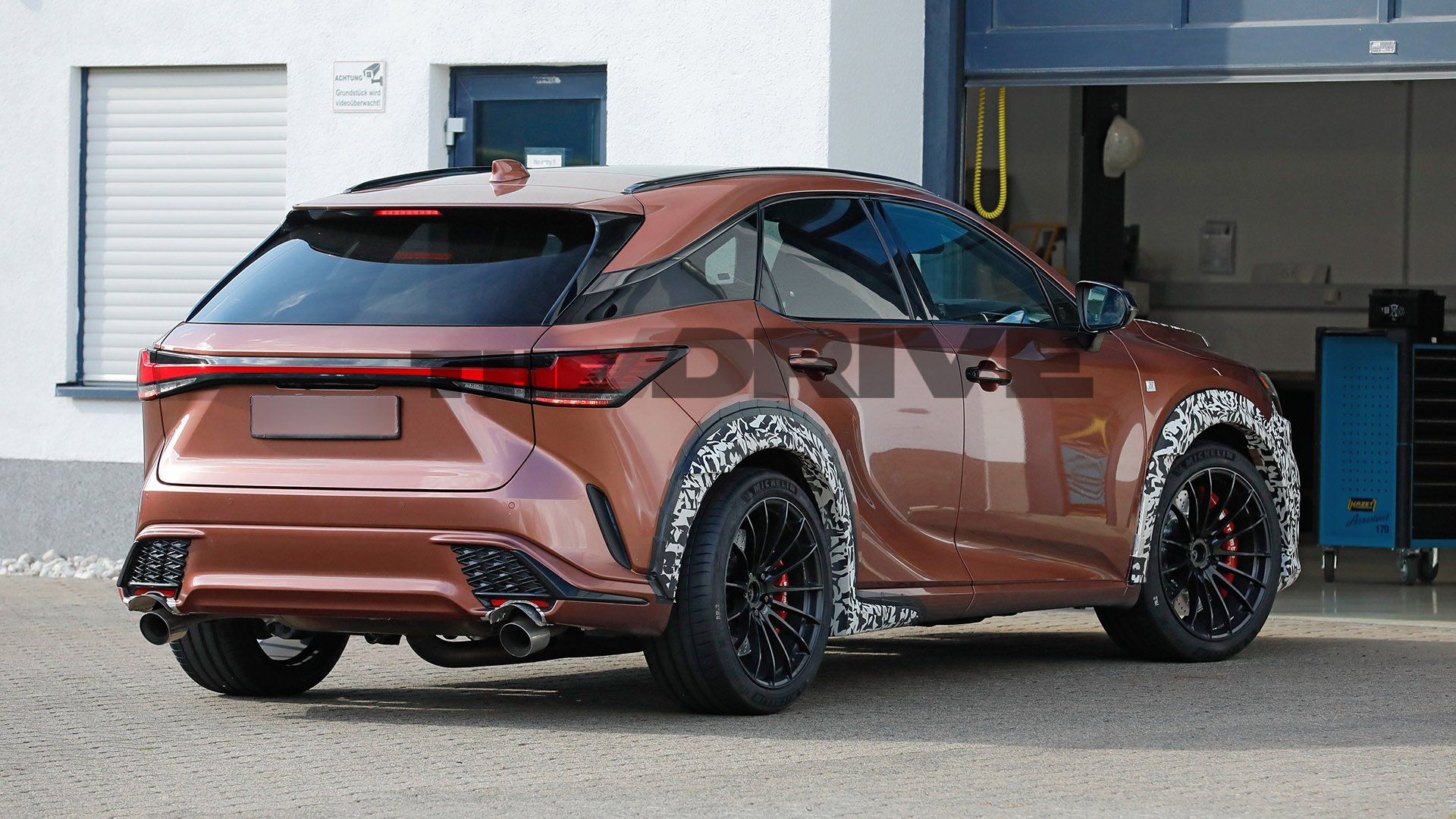
Spy shots reveal Lexus is developing an RX "Morizo" variant that transforms the conservative luxury crossover into a performance-oriented model with hot-hatch characteristics.
2 comments
Sign in to join the discussion.
Sign inThe RX Morizo signals Lexus finally addressing a critical safety-performance gap: high-capability crossovers driven by operators unfamiliar with the dynamics they're purchasing. When you add track-tuned suspension and powertrain aggression to a platform designed around passive safety and predictable handling, the integration testing burden becomes immense—this isn't just calibration, it's re-validating ADAS sensor coverage, ESC intervention thresholds, and crash structure compatibility under entirely new load cases. From an ISO 26262 perspective, any performance variant demands rigorous HARA updates to ensure systems like AEB and lane-keeping remain effective under spirited driving conditions where sensor blind spots and actuator limits shift. Lexus must demonstrate that Morizo's enhanced dynamics don't degrade the safety envelope that made the standard RX a top IIHS performer—operators need consistency, not surprises when emergency braking activates differently at 0.9g versus 0.6g cornering.
Toyota's Morizo push into the luxury crossover segment reveals something deeper than brand positioning—it's a hedge against regulatory uncertainty in performance vehicle futures. As emissions mandates tighten and ZEV requirements spread, track-oriented variants offer a transitional revenue stream while hybrid-electric architectures mature enough to deliver comparable dynamics without thermal penalty. Lexus likely views this as certification rehearsal: validating performance calibration pathways on ICE platforms that translate directly when the RX Morizo inevitably shifts to a plug-in or series-hybrid powertrain. The strategic timing matters for regional aviation parallels we track closely—both industries are learning that "performance" and "electrification" aren't opposing forces but adjacent certification challenges. Operators should watch whether Lexus treats this as a one-off halo product or the beginning of modular performance packages that survive powertrain swaps, because that modularity thinking is exactly what regional mobility needs as propulsion technology fragments across regulatory zones.