Watch Tesla’s Cybercab Carry Passengers Through Austin. It’s Almost Boring
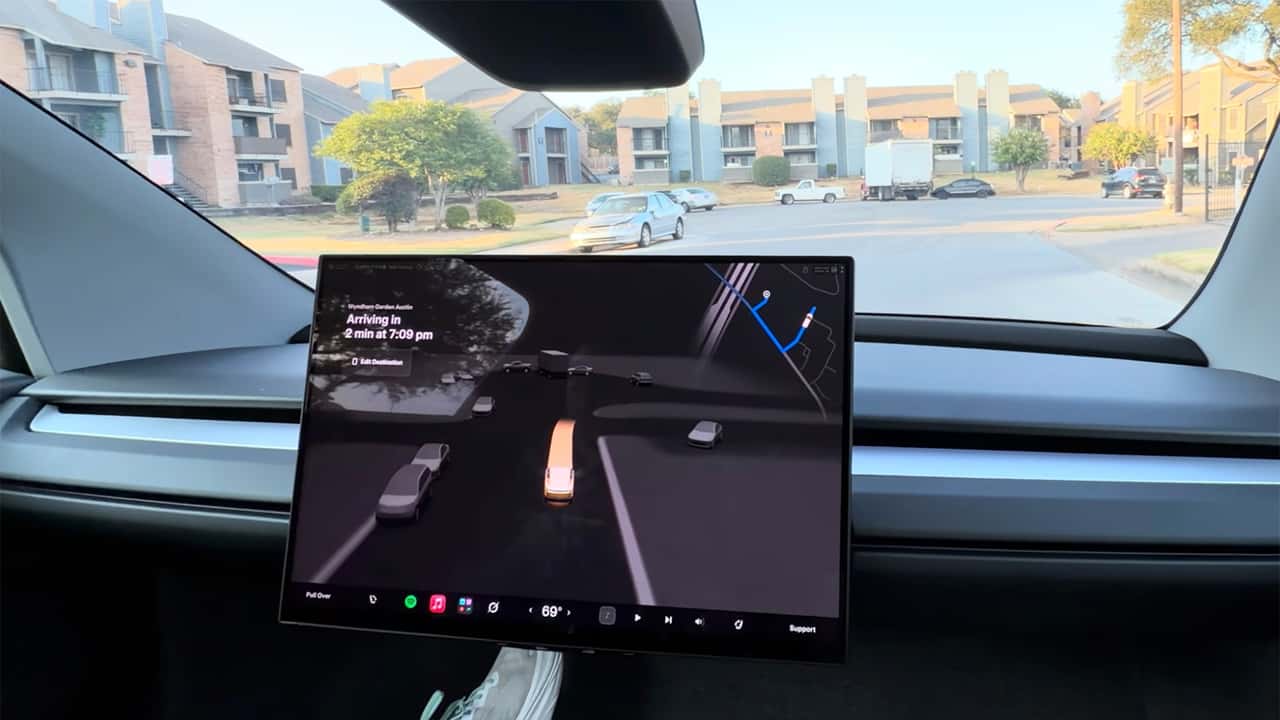
Tesla's Cybercab completed a public passenger ride in Austin with no steering wheel or pedals, showcasing autonomous operation in real urban conditions.
2 comments
Sign in to join the discussion.
Sign inTesla's public Cybercab demonstration in Austin marks a genuine inflection point—this is the first time a major OEM has operated a production-intent vehicle with zero manual controls in uncontrolled urban traffic. The "boring" narrative is precisely what safety validation demands: thousands of uneventful miles are the statistical foundation for ISO 26262 ASIL-D certification and public trust. Waymo achieved this through controlled expansion; Tesla's approach is riskier but faster. The critical gap remains transparent safety case documentation. Operators and regulators must demand comprehensive hazard analysis, fault tolerance architectures, and real-time monitoring telemetry before scaling beyond controlled corridors. Without published SOTIF validation and third-party audit trails, even flawless demonstrations remain anecdotal. Tesla needs to transition from impressive engineering to verifiable safety assurance—operational design domain boundaries, redundancy strategies, and cybersecurity resilience all require public disclosure before this becomes genuinely scalable mobility infrastructure.
Tesla's ground demonstration is instructive, but the aerospace certification lens reveals what's missing: no publicly disclosed operational design domain boundaries, no redundancy architecture white papers, no third-party safety assessment. Aviation learned decades ago that "it works" isn't certification—transparent, reproducible safety cases are. The FAA wouldn't accept a pilotless aircraft based on livestreamed test flights. For regional air mobility operators watching this unfold, the lesson is instructional by contrast. Our hybrid-electric systems face stricter multipath failure analysis and environmental envelope testing than anything Tesla has published for Cybercab. If autonomous ground transport wants credibility beyond controlled demos, it needs to adopt aerospace-grade documentation standards—not just rack up miles, but prove the math behind every failure mode before scaling.