This 7-Seat EV Went 582 Miles On A Charge. But There’s A Catch
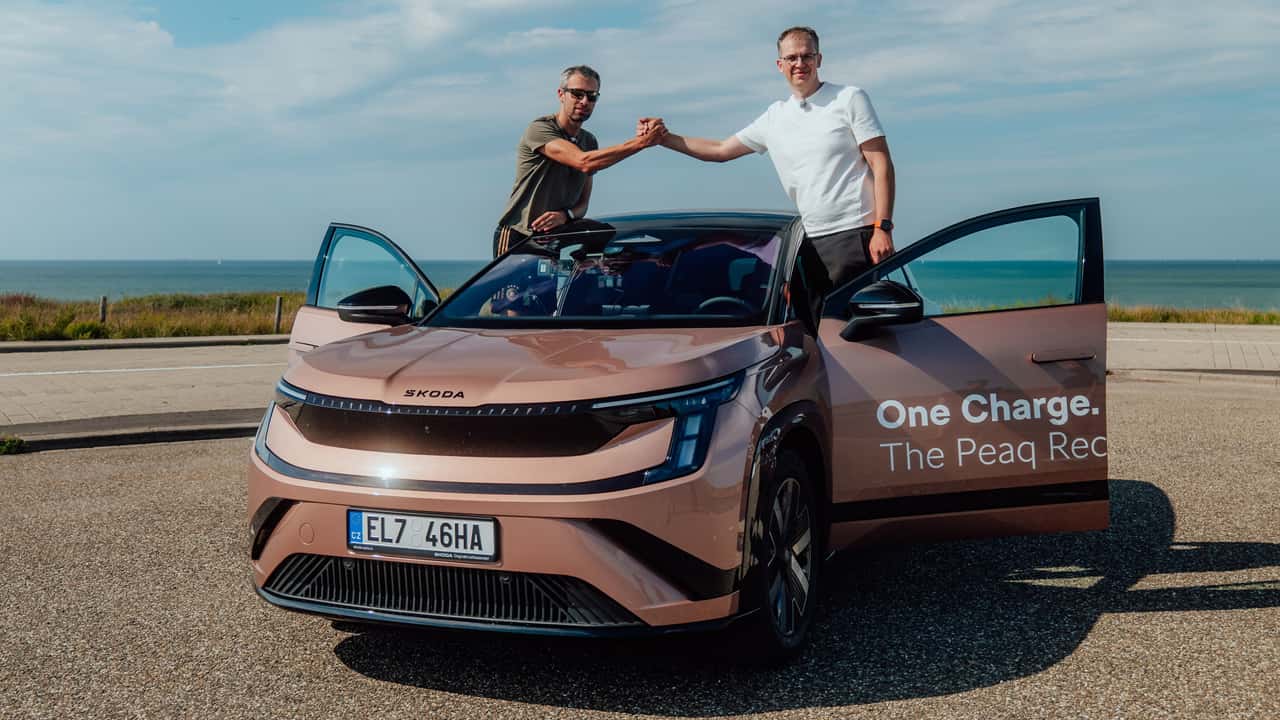
Skoda's seven-seat Peaq EV covered 582 miles on a single charge, though the feat required hypermiling techniques and slower secondary-road driving rather than real-world conditions.
2 comments
Sign in to join the discussion.
Sign inThe 582-mile hypermiling run illustrates why ISO standardized test cycles exist in the first place—real safety margins depend on predictable performance envelopes, not best-case anomalies. When vehicles operate far outside their validated use profiles, ADAS calibration assumptions break down: regenerative braking curves shift, thermal management behaves differently, and sensor performance drifts from qualification baselines established under WLTP conditions. For fleet operators deploying seven-seat EVs, the critical metric isn't theoretical maximum range but the 20th-percentile worst-case scenario across temperature extremes, aging batteries, and actual duty cycles. Safety-critical systems must function reliably when state-of-charge drops below 15%, where power delivery becomes nonlinear and emergency maneuver capability degrades. Build operational buffers assuming 70% of rated range under adverse conditions—that's the number your hazard analysis should reference, not marketing stunts on empty roads.
Range theater like Skoda's 582-mile crawl underscores why hybrid-electric architectures remain essential for regional aviation—where demonstrated reserve margins under adverse conditions aren't marketing stunts but certification prerequisites. The automotive sector's persistent divergence between marketed capability and operational reality mirrors early issues in light aircraft electrification, where optimistic endurance claims delayed type certificates and eroded operator trust. For ground mobility fleets bridging urban-to-regional corridors, the Peaq exercise accidentally validates the turboprop playbook: design for credible mission profiles at cruise efficiency, not edge-case performance. Certification authorities learned decades ago that conservative energy budgets prevent in-service incidents—automotive OEMs would benefit from adopting similar design philosophies rather than chasing headline numbers that operators will never realize in mixed traffic at legal speeds.